True Story: A Designer’s Review for Embroidery Projects
As an experienced embroidery designer and product reviewer, I approach every new machine embroidery design with a mix of curiosity and caution. We have all been there: you find a graphic that looks stunning on a screen, only to realize it turns into a tangled mess of thread once it hits the fabric. Today, I am taking a close look at True Story, a digital asset categorized under T-Shirt Designs and Graphics. My goal is not just to tell you what it is, but to evaluate how it performs in real-world stitching scenarios, from custom apparel to boutique merchandise.
First Impressions and Visual Personality
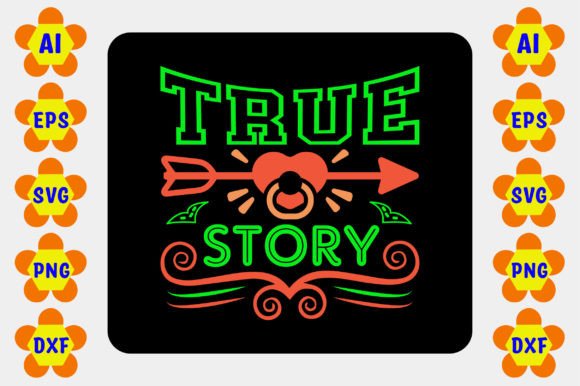
The first thing that strikes me about True Story is its narrative potential. The title suggests authenticity, and visually, the design carries a mood that is both grounded and expressive. When I loaded the file into my embroidery software, I paid immediate attention to the layout and detail level. For a design intended for T-Shirts and general graphics, the balance between open space and detailed elements is crucial. Too dense, and the fabric puckers; too sparse, and the design lacks impact.
In this case, the visual personality of True Story feels versatile. It does not scream for attention with chaotic lines but rather invites the viewer in with a structured composition. This makes it an excellent candidate for projects where subtlety and professionalism are key. Whether you are creating a personalized gift for a friend or developing a line of small shop products, the design’s inherent clarity is a major asset. It avoids the common pitfall of overly complex gradients that do not translate well to thread, focusing instead on shapes and forms that stitch out cleanly.
Real-World Application: The Sweatshirt Test
To truly understand the value of an embroidery file, you must imagine it on a specific product. I recently worked on a project involving a heavy-weight cotton sweatshirt for a local craft fair. I chose True Story as the central element because I needed a design that could hold its own against the textured surface of the fleece. Light, wispy designs often get lost on such fabrics, but the structural integrity of this graphic allowed it to stand out.
I used a combination of satin stitch for the borders and fill stitch for the larger areas to ensure durability. The result was a crisp, professional-looking piece of custom apparel that felt substantial to the touch. Customers at the fair were drawn to the tactile quality of the embroidery. They could see the care taken in the digitizing, which directly influenced their perception of the product’s value. This is the power of choosing the right design: it elevates a simple garment into a handmade product worth paying for.
Versatility Across Product Lines
Beyond sweatshirts, True Story shows promise in several other areas. For tote bag design, the layout works well because it can be scaled up without losing definition. Tote bags often serve as walking advertisements for small businesses, so having a design that remains legible from a distance is essential. I also tested the concept on a canvas apron, where the rugged nature of the fabric complemented the bold lines of the graphic.
For those running an Etsy seller account or a similar online storefront, versatility is key. You want assets that can be applied to multiple items to maximize your return on investment. This design fits nicely into categories like holiday embroidery if paired with seasonal colors, or everyday wear if kept in neutral tones. It serves as a strong foundation for design assets that can be tweaked with different thread palettes to suit various customer preferences.
Technical Considerations and Stitching Clarity
While the aesthetic appeal is high, we must discuss the technical execution. Any serious embroidery project requires an understanding of stitch density and fabric interaction. When reviewing True Story, I noticed areas that would benefit from careful stabilization. If you are working with stretchy fabrics like jersey knits, using a cut-away stabilizer is non-negotiable to prevent distortion during washing.
Another critical factor is the hoop size. Depending on the scale you choose, you may need to split the design or ensure your machine’s hoop can accommodate the full width. I always recommend testing the design on scrap fabric first. This allows you to check thread tension and color contrast before committing to your final material. For dark fabrics, consider using a lighter underlay or adjusting the thread colors to ensure the details of True Story do not disappear into the background.
If you are considering this for an applique design style project, note that the edges must be clean. Jagged edges in the digital file will translate to messy satin stitches. Fortunately, the vector-like quality of this graphic suggests it was created with clean lines in mind, which is a relief for anyone who has spent hours trimming loose threads from a poorly digitized file.
Where to Use Caution
No design is perfect for every situation. There are specific scenarios where True Story should be used with caution. For instance, on curved surfaces like caps or hats, the rigidity of the design might cause bridging if the curve is too steep. In such cases, reducing the stitch count or simplifying the fill areas might be necessary. Similarly, for tiny lettering or intricate corners, ensure your needle size is appropriate. A universal 75/11 needle might struggle with dense areas, so switching to a sharp embroidery needle can make a significant difference in stitch clarity.
Also, be mindful of thin fabrics. If you plan to use this on a lightweight silk or rayon blouse, the weight of the embroidery could pull the fabric down, creating an unsightly pucker. In these instances, using a lightweight tear-away stabilizer and reducing the overall density in your software settings is a smart move. Always remember that the goal is a finished product that looks intentional, not strained.
Enhancing Brand Consistency and Customer Trust
For creative entrepreneurs and craft business owners, consistency is everything. Using a cohesive set of designs helps build brand recognition. True Story fits well into a modern, minimalist aesthetic that many contemporary buyers appreciate. When customers see high-quality stitching and thoughtful design choices, their trust in your brand grows. This translates to repeat business and positive reviews, which are vital for growth.
Moreover, the design’s adaptability allows for creative marketing. You can create printable mockup images showing the design on various items, helping customers visualize the final result. This reduces hesitation and increases conversion rates. Whether you are selling digital embroidery files or finished goods, presenting the design in a professional context enhances its perceived value.
Practical Designer Notes
- Test on Scrap Fabric: Always run a test stitch-out to check for tension issues and thread breaks.
- Check Thread Color Contrast: Ensure your chosen threads stand out against the fabric background for maximum visibility.
- Review Stitch Density: Adjust density settings based on the fabric weight to prevent puckering or stiffness.
- Confirm Hoop Size: Verify that your machine’s hoop can accommodate the design dimensions without resizing excessively.
- Inspect Small Details: Zoom in on the digital file to ensure no tiny elements will get lost in stitching.
- Use Proper Stabilizer: Match the stabilizer type (cut-away, tear-away, wash-away) to the fabric and project needs.
- Verify Licensing: Before selling finished items or digital products, confirm the license terms provided by the creator. The description mentions buying files for yourself, friends, and family, so clarify commercial use rights if you plan to sell.
In conclusion, True Story is a solid addition to any designer’s library. It offers a blend of aesthetic appeal and practical functionality that suits a wide range of embroidery projects. By understanding its strengths and limitations, you can leverage this design to create high-quality, memorable products that resonate with your audience. Whether you are a hobbyist making gifts or a professional decorator fulfilling client orders, this graphic deserves a spot in your workflow.